

Feeling overwhelmed by endless "Made in China" options? You worry that a wrong choice means wasted money and low-quality goods. The secret is a simple framework to find your ideal partner.
The key is to stop looking at products and start vetting suppliers. First, identify if you need an OEM, ODM, or Brand Agency partner. Matching their business model to yours is the foundation for a successful, long-term sourcing relationship and avoids costly mistakes.
I see professional buyers fall into the same trap every day. They get lost in a sea of products that all look the same. They compare prices on items without first comparing the companies behind them. This is a recipe for failure. The truth is, the product is the last piece of the puzzle. Your first decision is about partnership. Let me walk you through the exact framework we use to guide our clients. It will help you filter out the noise and find a supplier that truly fits your business.
Should You Choose an OEM, ODM, or Brand Agency Supplier?
You see terms like OEM and ODM everywhere, but they are confusing. Choosing the wrong type of supplier can lead to failed launches, wasted time, and mismatched expectations for your business.
OEM (Original Equipment Manufacturer)1 is for large retailers needing custom products made to their specs. ODM (Original Design Manufacturer)2 is for e-commerce sellers wanting ready, viral designs. Brand Agencies suit regional distributors who need market exclusivity and a full product catalog.
As a manufacturer, I deal with all three types of partnerships. Each one serves a very different business need. A buyer from a large supermarket chain has completely different priorities than a fast-growing online brand. Understanding this difference is the first step to filtering your options from 999+ down to a handful of qualified partners. It’s not about which model is "best," but which model is best for you.
OEM: Your Manufacturing Partner
OEM is a service where we manufacture products based on your designs and specifications. You own the intellectual property, and we act as your production engine. This model is perfect for large, established retailers like chain supermarkets. They have in-house design teams and specific brand guidelines. Their main goal is to secure a reliable, high-volume manufacturing partner with competitive pricing and full compliance. They are not looking for design ideas; they are looking for production capacity and reliability.
ODM: Your Design Partner
ODM is when you select products from our existing catalog of original designs. We own the intellectual property, including patents and design rights. You can then brand these products as your own. This is the ideal model for top-tier e-commerce sellers. Your strength is marketing and distribution, not product development. You need proven, viral designs that you can get to market quickly. With ODM, you start with winning SKUs from day one.
Brand Agency: Your Market Partner
This model is for regional distributors and importers. You get the exclusive right to sell our ecoco brand products in your territory. You benefit from our entire product portfolio and brand recognition. This model is about building a long-term, strategic market presence. We provide you with a comprehensive product line, and you focus on building the sales channels and logistics in your region.
Here is a simple table to help you decide:
| Supplier Model | Best For... | Key Benefit |
|---|---|---|
| OEM | Large Chain Supermarkets | Custom manufacturing, cost control |
| ODM | Top E-commerce Sellers | Fast access to viral, patented designs |
| Brand Agency | Regional Distributors | Market exclusivity, full product portfolio |
How Can You Verify a Supplier's 'Viral Design' and 'Eco-Friendly' Claims?
Every supplier promises "viral products" and "eco-friendly materials." But these are just marketing words. Believing them without proof can lead to poor sales, bad reviews, and legal issues.
Do not accept claims at face value. Ask for specific proof. For a "viral design," request sales velocity data from a comparable market3. For "eco-friendly" materials, demand specific certifications like REACH or RoHS and a material composition report.
One of the biggest mistakes I see buyers make is getting excited by buzzwords. A professional buyer, on the other hand, operates on data. You need to learn how to turn a supplier's marketing claims into direct, verifiable questions. This simple change in communication separates the amateurs from the professionals. It forces the supplier to show you evidence instead of just telling you stories. This isn't about being difficult; it's about doing your job and protecting your investment. A good supplier will respect this and have the answers ready. A weak supplier will make excuses.
Here’s how you can reframe common marketing claims into business-critical questions:
From Vague Claim to Smart Question
-
Vague Claim: "This is a viral, hot-selling product."
- Smart Question: "What was the weekly sales velocity for this SKU in the German market last quarter? Can you show me the sales trend data since its launch?"
- Why this works: This question demands specific numbers from a specific market. It tells you if the product is genuinely popular or if the supplier is just exaggerating.
-
Vague Claim: "We guarantee high quality."
- Smart Question: "What are your AQL (Acceptable Quality Limit) standards4 for this product? Can I see a copy of your standard QC inspection report for this item?"
- Why this works: "High quality" is subjective. AQL is an international standard for quality control. This question forces the supplier to define their quality standards in measurable terms.
-
Vague Claim: "Our product is made from eco-friendly material."
- Smart Question: "What is the exact material composition? Can you provide the REACH or RoHS compliance certificate5 for this specific material from your supplier?"
- Why this works: This pushes for legal proof. In many regions, "eco-friendly" is a regulated term.6 Without certificates, your products could be stopped at customs, and you could face fines7.
How Do You Match a Supplier's Capabilities to Your Business Risks?
You found a supplier with a great-looking product and a good price. But are they the right fit? A mismatch between their capabilities and your business needs can create huge problems later on.
Assess a supplier's capabilities against your biggest risks. A large retailer's main risk is stock-outs, so they need a supplier with massive, proven production capacity. An e-commerce seller's main risk is missing trends, so they need a partner with fast R&D.
Sourcing is a risk management exercise. Your job as a buyer is to identify your primary business risks and find a partner who is equipped to minimize them. When we talk to buyers from large European chains, their first questions are not about our new designs. They ask about our factory audits, social compliance reports like BSCI8, and our monthly production capacity. They are protecting themselves against supply chain disruptions and compliance violations, which could cost them millions. An Amazon seller, however, will ask about our new product development cycle and if we have patent protection9. They are protecting themselves against copycats and getting stuck with outdated inventory.
Here is how different buyers should think about risk:
| Buyer Profile | Top Business Risk | Key Supplier Capability to Verify |
|---|---|---|
| Large Chain Supermarket | Supply chain disruption, compliance failure | Massive production capacity (e.g., millions of units/month), social audits (BSCI, Sedex10), full product certifications (REACH, LFGB11). |
| Top E-commerce Seller | Missing trends, negative reviews | Fast R&D cycle (e.g., 10+ new designs per month), strong IP/patent protection, strict final product QC for user experience. |
| Regional Distributor | Market competition, low profit margins | Formal brand exclusivity agreements for your territory, a broad and deep product portfolio to offer, and marketing support materials. |
Don't just ask a supplier if they have these things. Ask for proof. Ask for the BSCI audit report and check the date. Ask for the patent numbers and verify them. Ask for the production capacity data and compare it to your annual forecast. A true partner will have this information organized and ready to share.
Is Your Supplier a Real Manufacturer or Just a Middleman?
Many suppliers you find online claim to be factories, but they are just trading companies. Working with a middleman adds unnecessary costs, slows down communication, and gives you no control over quality.12
A true manufacturer has an integrated operation: in-house R&D, large-scale production facilities, and OEM/ODM customization services. The easiest way to verify is to ask for a factory tour (virtual or real) and to see their patents and R&D team.
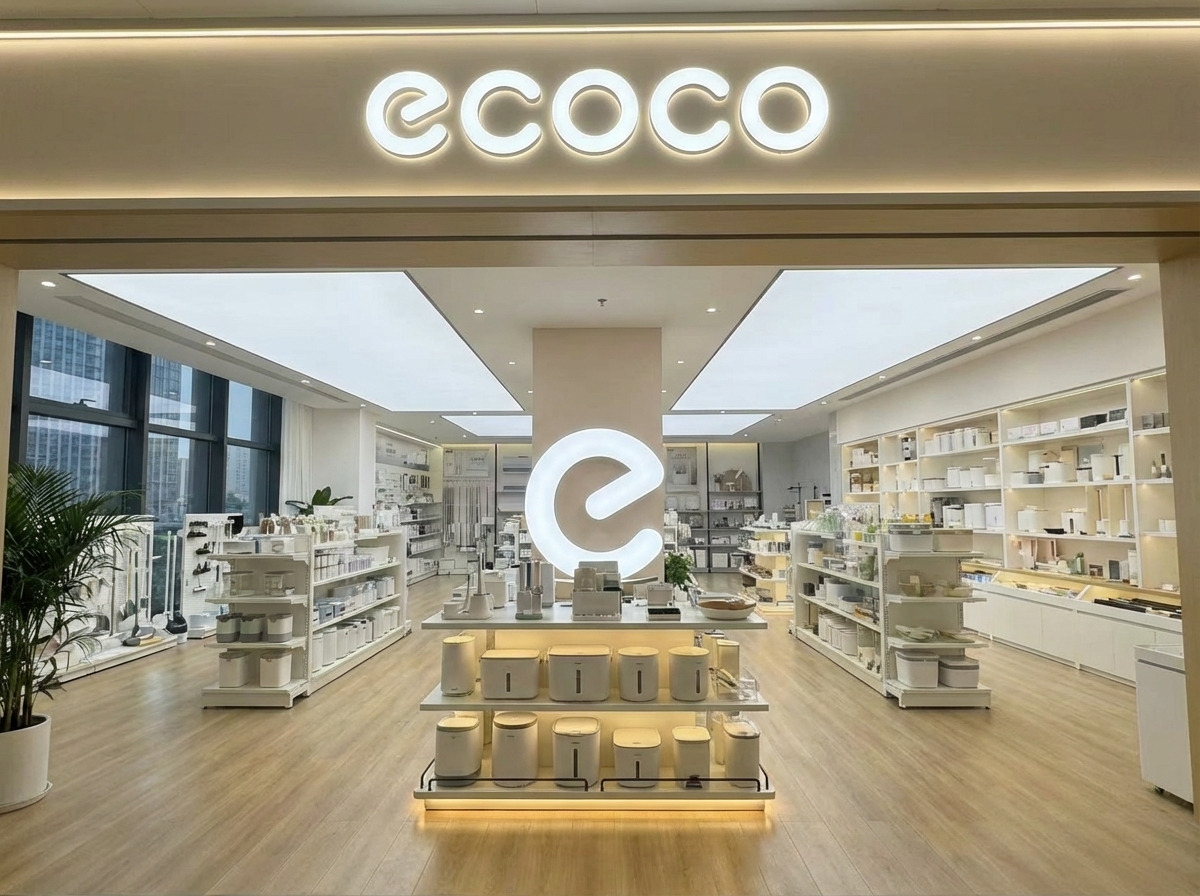
At ecoco, our identity is built on our integrated process. We have over 200 people on our R&D and design team and hold more than 900 patents. Our factory is a massive, real place where we can show you raw materials coming in one end and finished products shipping out the other. We can have a technical discussion with you about mold design, material properties, and production efficiency. This is the difference between a partner and a reseller. A trading company can only show you a catalog and a price. A real manufacturer can show you the entire value chain and work with you to optimize it.
Here are some clear signs to help you distinguish a manufacturer from a trading company:
Green Flags for a Manufacturer
- They own patents: Ask to see the patent certificates for the products they are selling.
- They have a large R&D team: Ask how many engineers and designers they have in-house.
- They welcome factory audits: They should be eager to show you their facility, either in person or through a detailed video tour.
- Their business license says "Manufacturing": The legal scope of their business should include manufacturing/production.
- They can answer technical questions: They can discuss tooling, injection molding cycle times, and raw material specifications.
Red Flags for a Trading Company
- They sell everything: Their catalog includes unrelated items like household goods, electronics, and clothing.
- They are vague about the factory location: They might say their "partner factory" is in a different province.
- Their address is in a downtown office building: A real factory is located in an industrial zone.
- They cannot provide original design files or patents.
- They avoid deep technical conversations.
Conclusion
Choosing the right Chinese supplier isn't about finding the cheapest product. It's about finding a long-term partner whose business model and capabilities match your own, minimizing your risks and ensuring success.
"Original equipment manufacturer - Wikipedia", https://en.wikipedia.org/wiki/Original_equipment_manufacturer. A neutral encyclopedia source defines an original equipment manufacturer as a firm that produces goods or components used or sold by another company, supporting the article's use of OEM as a manufacturing-partner category; this source does not by itself establish that OEM is best for any specific buyer type. Evidence role: definition; source type: encyclopedia. Supports: A neutral source should define OEM and explain its role in manufacturing or supply chains.. Scope note: Contextual support for the term, not proof of the article's buyer-segmentation advice. ↩
"Original design manufacturer - Wikipedia", https://en.wikipedia.org/wiki/Original_design_manufacturer. A neutral reference source defines an original design manufacturer as a company that designs and manufactures products that may be rebranded by another firm, supporting the article's distinction between ODM and OEM; it does not verify the commercial performance of any specific ODM product. Evidence role: definition; source type: encyclopedia. Supports: A neutral source should define ODM and distinguish it from OEM by design ownership or product-development responsibility.. Scope note: Supports the general definition, not the article's claims about viral designs or e-commerce suitability. ↩
"How to Predict Demand for Your New Product - Kellogg Insight", https://insight.kellogg.northwestern.edu/article/how-to-predict-demand-for-your-new-product-2. Research on demand forecasting commonly treats past sales rates and market-level sales observations as inputs for estimating product demand, which supports using comparable-market sales velocity as evidence of commercial traction; the evidence is indirect because it does not prove that a supplier's reported figures are accurate. Evidence role: mechanism; source type: paper. Supports: A research source should show that historical sales, sales rates, or market-level sales data are used in demand forecasting or product-performance evaluation.. Scope note: Contextual support for the evaluation method, not validation of any individual supplier's sales data. ↩
"Acceptable quality limit - Wikipedia", https://en.wikipedia.org/wiki/Acceptable_quality_limit. ISO 2859-1 describes sampling procedures for inspection by attributes using an acceptance quality limit, supporting the article's statement that AQL provides a measurable framework for quality inspection; the standard does not show that any particular supplier follows it correctly. Evidence role: definition; source type: institution. Supports: An ISO or standards-related source should define acceptance quality limit and connect it to sampling inspection.. Scope note: Supports the standard's existence and purpose, not a supplier's implementation. ↩
"RoHS - Wikipedia", https://en.wikipedia.org/wiki/RoHS. European Commission materials on REACH and RoHS document legal frameworks governing chemicals and restricted hazardous substances in products placed on the EU market, supporting the article's emphasis on compliance documentation; applicability depends on the product category and market jurisdiction. Evidence role: general_support; source type: government. Supports: An EU source should explain REACH chemical obligations and RoHS restrictions on hazardous substances in applicable products.. Scope note: Directly supports the relevance of REACH and RoHS, but not every product mentioned in the article will fall under both regimes. ↩
"Green Guides | Federal Trade Commission", https://www.ftc.gov/news-events/topics/truth-advertising/green-guides. Government guidance such as the FTC Green Guides and European Commission green-claims materials address the substantiation of environmental marketing claims, supporting the article's statement that terms like “eco-friendly” may be regulated; the rules vary by jurisdiction and by the exact wording of the claim. Evidence role: general_support; source type: government. Supports: A government or international source should show that environmental claims are regulated or guided by consumer-protection rules.. Scope note: Supports regulatory context, not a universal rule in every market. ↩
"Penalties Program - U.S. Customs and Border Protection", https://www.cbp.gov/trade/programs-administration/penalties. Customs and market-surveillance authorities describe enforcement powers that can include detention, refusal, recall, or penalties for non-compliant imported goods, supporting the article's warning about customs and fines; the exact consequence depends on the product, violation, and jurisdiction. Evidence role: general_support; source type: government. Supports: A customs or market-surveillance authority should explain that non-compliant imported goods may be detained, refused, recalled, or penalized.. Scope note: General legal-risk support, not proof that every missing certificate leads to detention or fines. ↩
"amfori BSCI - Business Social Compliance Initiative", https://www.amfori.org/amfori-bsci/. Institutional descriptions of the amfori BSCI programme identify it as a framework for monitoring and improving social performance in supply chains, supporting the article's treatment of BSCI as social-compliance evidence; such reports indicate audit findings but do not guarantee continuous compliance after the audit date. Evidence role: definition; source type: institution. Supports: An institutional source should define BSCI and describe its role in social compliance auditing or monitoring.. Scope note: Supports the nature of BSCI reports, not the current condition of any specific factory. ↩
"Exceptions and Limitations to Patent Rights - WIPO", https://www.wipo.int/en/web/patents/topics/exceptions_limitations. WIPO and patent-office materials explain that patents confer time-limited exclusive rights over qualifying inventions, supporting the article's statement that patent protection can reduce copying risk; patents protect only the claimed invention and do not guarantee market exclusivity for all product features. Evidence role: definition; source type: institution. Supports: An intellectual-property authority should explain that patents grant exclusive rights to prevent others from making, using, or selling an invention for a limited period.. Scope note: Supports the legal mechanism, not the strength or enforceability of any specific patent. ↩
"SMETA, the world's leading audit - Sedex", https://www.sedex.com/solutions/smeta-audit/. Institutional materials describe Sedex as a platform for sharing responsible-sourcing information and SMETA as an ethical-audit methodology, supporting the article's use of Sedex as a social-compliance due-diligence reference; membership or a past audit does not by itself prove full compliance. Evidence role: definition; source type: institution. Supports: A source should explain Sedex and SMETA as tools or platforms for ethical trade and supply-chain assessment.. Scope note: Supports Sedex's due-diligence role, not the reliability of any individual supplier. ↩
"EU REACH - International Trade Administration", https://www.trade.gov/eu-reach. Official European and German regulatory sources describe REACH as a chemicals framework and LFGB as German legislation covering food-related and certain consumer-product safety matters, supporting the article's reference to these as relevant compliance checks; applicability depends on product use, material, and destination market. Evidence role: general_support; source type: government. Supports: Government or official sources should explain REACH chemical regulation and Germany's LFGB rules for food, feed, cosmetics, or food-contact materials.. Scope note: Contextual regulatory support, not confirmation that a specific product requires both certifications. ↩
"[PDF] impact of lending relationships on transaction costs incurred by ...", https://etd.ohiolink.edu/acprod/odb_etd/ws/send_file/send?accession=osu1068473959&disposition=inline. Supply-chain and transaction-cost literature links additional intermediaries with added coordination costs, information asymmetry, and reduced direct oversight, supporting the article's caution about middlemen; the effect is context-dependent because intermediaries can also provide useful services in some markets. Evidence role: mechanism; source type: paper. Supports: A supply-chain or transaction-cost study should explain how intermediaries can affect cost, communication, coordination, or control.. Scope note: Contextual support for the risk mechanism, not proof that every trading company increases cost or reduces quality. ↩